
Episode 1127
What Does the Bible Really Say About Wealth and Exploitation?
The primary focus of this podcast episode is a profound exploration of the teachings found in James Chapter five, verses one through six, which addresses the moral implications of wealth and the exploitation of workers. We delve into the prophetic admonitions of James, who does not shy away from confronting the uncomfortable realities of economic injustice and the systemic oppression that persists in our society. Through this discourse, we illuminate the biblical perspective that prioritizes the experiences of workers over owners, challenging conventional narratives that often glorify wealth accumulation. Moreover, we emphasize that hoarding wealth not only corrupts the individual but also perpetuates a cycle of spiritual decay. As we engage with these challenging themes, we invite our listeners to reflect on their own roles within these economic systems and to consider actionable steps towards fostering justice and compassion in their interactions with others.
Takeaways:
- The podcast provides a progressive perspective on the Bible, emphasizing the importance of understanding scripture in a contemporary context.
- Today’s reading from James highlights the plight of exploited workers, urging listeners to consider their treatment and dignity.
- Wealth accumulation is critiqued as a source of moral decay, suggesting that hoarding riches leads to personal and societal harm.
- James's message compels us to reflect on our economic systems, urging an awareness of how they impact the most vulnerable.
- The podcast proposes a practical action step to engage with workers in our lives, fostering relationships that acknowledge their humanity.
- Listening to the cries of the exploited is essential; our faith must address systemic injustices rather than remain passive.
Links referenced in this episode:
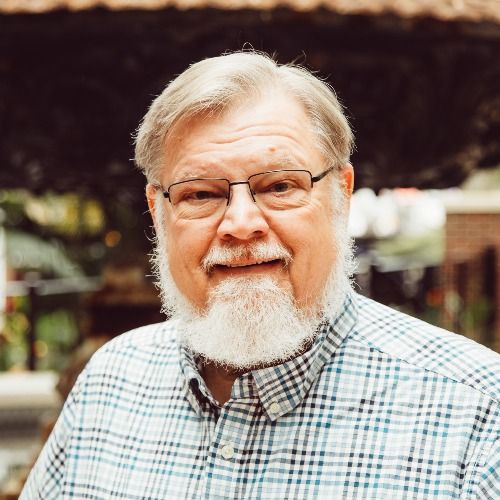
The "Daily Bible Refresh" is presented each day by Rev. Dr. Brad Miller who has a goal of speaking a bit of the bible into two million ears (one million people) in three years (2025-2028).
He is the author of "The A, B, C-1,2,3 Bible Study Guide" Free to you by clicking HERE.
Brad served as a local church pastor for forty years and has a background in radio and podcasting. Moreover, he is a life-long student of The Bible.
He believes in the words of Jesus that “scripture is fulfilled in your hearing” (Luke 4:21)
The "Daily Bible Refresh" is available seven days a week by 6:00 am ET. The episodes are no longer than ten minutes long and are...
- Understandable: A reading from the New Testament (usually the Gospel) selected from the Revised Common Lectionary using "The Message" translation.
- Relatable: You will have a couple of "points to ponder" from the text which will relate to your life
- Applicable: Every episode includes a way you can take action based on the reading
- A recommended resource to help you go deeper in biblical study and spiritual direction.
- A prayer for your day.
A companion resource to the Voice of God Daily Podcast is the “ABC Bible Study Guide” available by clicking HERE.
The "Daily Bible Refresh" is available every day at VoiceofGodDaily.com on Apple Podcasts, Spotify and all major podcast directories.
You can help Dr. Brad attain his goal of getting a bit of the bible into two million ears by subscribing to "Daily Bible Refresh" on Apple Podcasts, leaving a five-star rating, and writing a review. More importantly please share with your network of family and friends about the "Daily Bible Refresh".
Please make listening to the "Daily Bible Refresh" a part of your daily life.
Remember… “All scripture is God-breathed and useful”(2 Timothy 3:16)
Transcript
Hello my friend Dr. Brad Miller here with the Daily Bible Refresh.
Speaker A:This is your daily reading of the Bible from a progressive point of view.
Speaker A:In a bit I will read the New Testament lessons selected from the Revised Common Lectionary for this very day.
Speaker A:The reading is understandable.
Speaker A:I use the message version relatable.
Speaker A:Please listen to the points to ponder and applicable with action steps you can take.
Speaker A:We pray and are done in less than 10 minutes.
Speaker A:It's all brought to you by voiceofgoddaily.com which is the home of your free personal Bible Study Guide, the ABC 1, 2, 3 Bible Study Method.
Speaker A: lionaires a million people by: Speaker A:You can help by saving and subscribing to the podcast and tagging your friends.
Speaker A:Here's today's reading.
Speaker B:Hello good people.
Speaker B:Dr. Brad Miller here and just thank you for joining me today.
Speaker B:Pull up a chair.
Speaker B:Let's have a few moments together because we're diving into a passage of scripture that honestly a lot of biblical teachers avoid.
Speaker B:Like it's radioactive, it's uncomfortable, it steps on some toes and mine included.
Speaker B:And we're in James Chapter five, verses one through six.
Speaker B:And James doesn't hold back, not even a little.
Speaker B:Before I read the scripture, I'm going to tell you something that I've been thinking about the last few weeks.
Speaker B:Just got back from a vacation to Florida and driving through the mountains of North Carolina and and some of the went through some of the places we've hiked many times in the Great Smoky Mountains and, and you know in those wooded areas we passed this gorgeous homes way up in the top of the mountains overlooking the valley and just beautiful, stunning.
Speaker B:And part of my thinking was wow, wouldn't that be something to live there.
Speaker B:And then almost immediately I began to think, I wonder about the workers who built it where they paid fairly, did they have health insurance?
Speaker B:Could they ever afford to live somewhere like that?
Speaker B:They were building their themselves.
Speaker B:Now I didn't used to always think that that way, but passages like this one we're going to get into today kind of rewired my brain a little bit and I'm grateful for it.
Speaker B:It makes me want to squirm.
Speaker B:So let me read this to you.
Speaker B:It's from the Message translation by Eugene Peterson.
Speaker B:And it, you know, I love the way he puts things.
Speaker B:It doesn't soften the the edge of this message at all.
Speaker B:Here's the reading and a final word to you.
Speaker B:Arrogant, rich, take some lessons in Lament.
Speaker B:You'll need buckets for the tears when the crash comes upon you.
Speaker B:You're Your money is corrupt and your refined clothes stink.
Speaker B:Your greedy luxuries are a cancer in your gut, destroying your life from within.
Speaker B:You thought you were piling up wealth, but what you've piled up is judgment.
Speaker B:All the workers you've exploited and cheated cry out for judgment.
Speaker B:The groans of the workers you used and abused are a roar in the ears of the master avenger.
Speaker B:You've looted the earth and lived up to it, but all you have to show for it is a fatter than usual corpse.
Speaker B:In fact, what you've done is condemn and murder perfectly good persons.
Speaker B:You stand there, who stand there and take it.
Speaker B:Wow.
Speaker B:That's the end of the reading.
Speaker B:It's pretty intense one, right?
Speaker B:James isn't interested in some polite suggestions.
Speaker B:He's issuing a prophetic warning.
Speaker B:So let's dig into this.
Speaker B:I got three points to ponder today, and I think they'll challenge all of us to think differently about wealth and work and what it means to follow Jesus in an economy and often runs counter to his values.
Speaker B:Here's point number one.
Speaker B:The Bible consistently centers the experience of workers, not owners.
Speaker B:This might be the most countercultural thing about scripture when it comes to the economic situation in our world today.
Speaker B:In our society, we usually tell stories from the perspective kind of the business owners, investors, entrepreneurs.
Speaker B:Those are the heroes, the people who create jobs and drive the economy.
Speaker B:And look, I'm not saying the contributions don't matter.
Speaker B:I believe that there's a place for that, of course.
Speaker B:But notice whose voice James amplifies here.
Speaker B:The workers, the exploited, the cheated.
Speaker B:James Yu says that their cries are the roar in the ears of the master Avenger.
Speaker B:God hears them.
Speaker B:God centers their experience.
Speaker B:Their groans aren't background noise.
Speaker B:They're the primary concern of God the divine.
Speaker B:This is consistent throughout Scripture.
Speaker B:The prophets constantly rail against those who exploit laborers.
Speaker B:Deuteronomy commands that workers be paid their wages daily because they depend on that income.
Speaker B:And Jesus told parables where workers confront unjust masters.
Speaker B:The biblical witness consistently ask, how are the workers being treated?
Speaker B:In my other podcast about cancer impacted people, I talked with people who sometimes had to keep working through treatment because they couldn't afford to not work.
Speaker B:No paid leave, no safety net.
Speaker B:And I think about James words.
Speaker B:The groans of the workers you used and abused.
Speaker B:Those groans are still groaning today, and God still hears them.
Speaker B:So when we evaluate economic systems and policies, or even our own choices as consumers and employers, the biblical question is it Is it profitable?
Speaker B:It's how does this affect the most vulnerable workers involved?
Speaker B:Point number two, wealth hoarded.
Speaker B:Is wealth corrupted.
Speaker B:James uses a very vivid image here.
Speaker B:Your money is corrupt and your fine clothes stink is what it says.
Speaker B:The message translation really captures the original Greek word here, which suggests rotting or moth eaten.
Speaker B:James is saying that wealth held too tightly actually decays.
Speaker B:It destroys itself and it destroys the one holding onto it tight.
Speaker B:Here's the thing.
Speaker B:I don't think James is condemning wealth itself.
Speaker B:The biblical tradition doesn't say money is evil.
Speaker B:He says it says the love of money, the hoarding of money, the grasping, the making it your security only that's the problem.
Speaker B:Wealth is like water.
Speaker B:When it flows, it brings life.
Speaker B:When it stagnates, it becomes toxic.
Speaker B:I think about my granddaughters and one of the favorite things in the world I do is have fun and laugh with them.
Speaker B:Play in the snow, things like that.
Speaker B:Watching their joy at the simplest things.
Speaker B:Kids don't hoard joy.
Speaker B:They don't save up laughter for later.
Speaker B:They let it flow.
Speaker B:And somehow there is always more.
Speaker B:That's how generosity works.
Speaker B:It's counterintuitive, but the more you release, the more of it that you experience.
Speaker B:James warns here that hoarding doesn't actually protect you.
Speaker B:Your greedy luxuries are a cancer in your gut, destroying your life from within.
Speaker B:Oh, that's rough.
Speaker B:I know a thing or two about cancer.
Speaker B:I've gone through it.
Speaker B:And this is talking about the cancer of greed.
Speaker B:Accumulation beyond what we need doesn't bring security.
Speaker B:It brings spiritual sickness, cancer.
Speaker B:And if you've ever known someone consumed by protecting their wealth, you know exactly what James is talking about here.
Speaker B:Point to ponder.
Speaker B:Number three.
Speaker B:Systematic exploitation is a moral crisis, not just an economic reality.
Speaker B:This is where James gets really pointed and where progressive Christianity has something important to say.
Speaker B:James doesn't treat worker exploitation as just an unfortunate side impact of a business.
Speaker B:He calls it condemnation and murder of perfectly good persons.
Speaker B:Quote murder.
Speaker B:That's strong language.
Speaker B:But James understands something we often overlook.
Speaker B:When systems are designed so that some people can't earn enough to live with dignity.
Speaker B:When wages are suppressed while profits soar, when workers are treated as disposable, that's not just bad economics, it's violence.
Speaker B:Slow violence, structured violence, but violence nonetheless.
Speaker B:This isn't about demonizing individuals who have money.
Speaker B:Don't get me wrong.
Speaker B:It's about recognizing that we all participate in systems, and those systems have moral dimensions.
Speaker B:When I buy a product made by exploited workers overseas, I'm part of that system.
Speaker B:When I benefit from an economy that keeps wages low to keep prices low, I'm implicated.
Speaker B:James is calling us to awareness and to repentance.
Speaker B:Not just personal repentance, but collective reckoning.
Speaker B:You know, I'm a huge fan of my Indianapolis area teams, IU football, Colts, Pacers fever, and I love the games.
Speaker B:But I also know that the stadiums that they play in are built with public money.
Speaker A:And.
Speaker B:And while teachers at the universities and the public schools sometimes just have to scrape by, these are the tensions we live in.
Speaker B:James doesn't let us off the hook by pretending we're not involved.
Speaker B:So let's talk about an action step for you to take.
Speaker B:I know it's been a bit of a heavy lesson here, but let's bring it home with something practical.
Speaker B:I want you to do an audit.
Speaker B:Not a financial audit so much, but a relational one.
Speaker B:Think about the workers who make your life possible.
Speaker B:The people at the grocery store, the convenience mart, the people you encounter who serve you.
Speaker B:The server at a restaurant, the person who makes your coffee, the UPS driver delivers your packages.
Speaker B:The janitor who cleans your office or your church.
Speaker B:The people who pick the produce that you eat.
Speaker B:The people swing a hammer on your behalf.
Speaker B:And your action step is this.
Speaker B:Choose one of those workers you actually encounter and learn their name.
Speaker B:If you don't already know it, have a brief conversation.
Speaker B:I already have a person in mind.
Speaker B:At my local grocery store I shop at, her name is Barb.
Speaker B:And ask how they're doing.
Speaker B:Then actually listen to how they're doing.
Speaker B:And if you're in any kind of position or influence over how workers are treated or compensated, bring James words into that space.
Speaker B:Ask yourself, would this policy, this wage, this spiritual practice calls groans that rise to God's ears.
Speaker B:Sometimes the most prophetic thing we can do is simply see the people our systems are designed to make invisible and make them visible.
Speaker B:We're going to come back and pray about it here in just a moment.
Speaker B:Just first, a quick word that we have a resource for you called the.
Speaker B:Called the ABC 123 Bible Study Resource.
Speaker B:We want you to go over to our website, Voice of God Daily, and pick up that resource.
Speaker B:Let's pray.
Speaker B:God of the worker and the wanderer, God who hears every groan and counts every tear.
Speaker B:We come to you today a little uncomfortable.
Speaker B:Your word through James doesn't let us look away.
Speaker B:It doesn't let us pretend that faith is only personal, only private, only about our souls.
Speaker B:In some future heaven, forgive us for the ways we benefited from systems that exploit.
Speaker B:Forgive us for the times when we have looked away because looking was too costly.
Speaker B:Forgive us for loving comfort more than justice, security, more than solidarity.
Speaker B:Open our ears to hear what you hear.
Speaker B:The cries of workers who are cheated, the groans of those who are used and discarded, help us see the people our world makes invisible and God.
Speaker B:We confess that many of us have had more than what we need and teach us to hold it loosely, not tightly.
Speaker B:Show us how to let wealth flow rather than stagnate.
Speaker B:Deliver us from the cancer of accumulation that destroys from within.
Speaker B:Give us courage to ask hard questions of our systems, our leaders, ourselves, and give us wisdom to know what faithfulness looks like in an economy that often worships the wrong things.
Speaker B:Thank you for your relentless love, the love that affixed the comfort that of afflicts the comfortable and comforts the afflicted.
Speaker B:May we be the people who embody that love in tangible ways.
Speaker B:This week, in the name of Jesus who had nowhere to lay his head but Selma had everything that mattered.
Speaker B:Amen.
Speaker A:My friend, I am delighted you chose to join me for today's reading.
Speaker A:The Daily Bible Refresh is coming completely listener supported.
Speaker A: on years, a million people by: Speaker A:I would be so grateful if you would go to voiceofgodddaily.com and share your gift of any amount.
Speaker A:Thanks much.
Speaker A:My name is Dr. Brad Miller and I'll be right here tomorrow with your Daily Bible Refresh.
Speaker A:Please subscribe and tag your friends until tomorrow.
Speaker A:Remember, God's loyal love doesn't run out.
Speaker A:His merciful love hasn't dried up, it's created new every morning.